

Career Development
Start Your Next Adventure
Not having a traditional job does not mean you are not progressing. In many cases, especially in Finland, people build their first real experience through volunteering and other short-term roles.
The difference is not in the type of work, but in how intentionally you approach it.
This section will help you understand how to use these opportunities not just to stay busy, but to build skills, explore directions, network and position yourself for future roles.
Start from yourself: what are you building?
Before looking at opportunities, you need clarity on your own direction. Without it, volunteering or part-time work easily become random and disconnected.
Think in three simple steps:
What can you do already? (If you need help identifying that, we suggest having a look at this lesson)
What would you like to learn or try?
Where could this be useful right now?
The goal is not to have a perfect plan, but choose a direction, even a temporary one, and use your summer to work on it.
Volunteering and seasonal work are most valuable when they can support your long-term career goals, otherwise, they can remain as isolated experiences in your CV, that are difficult to explain or build on. That being said, if you’re looking to experiment, or get out of your comfort zone - do it! Sign up to something random and see where it takes you. Opportunities can be found everywhere around you, so don’t be afraid to take them!

Understanding the role of volunteering
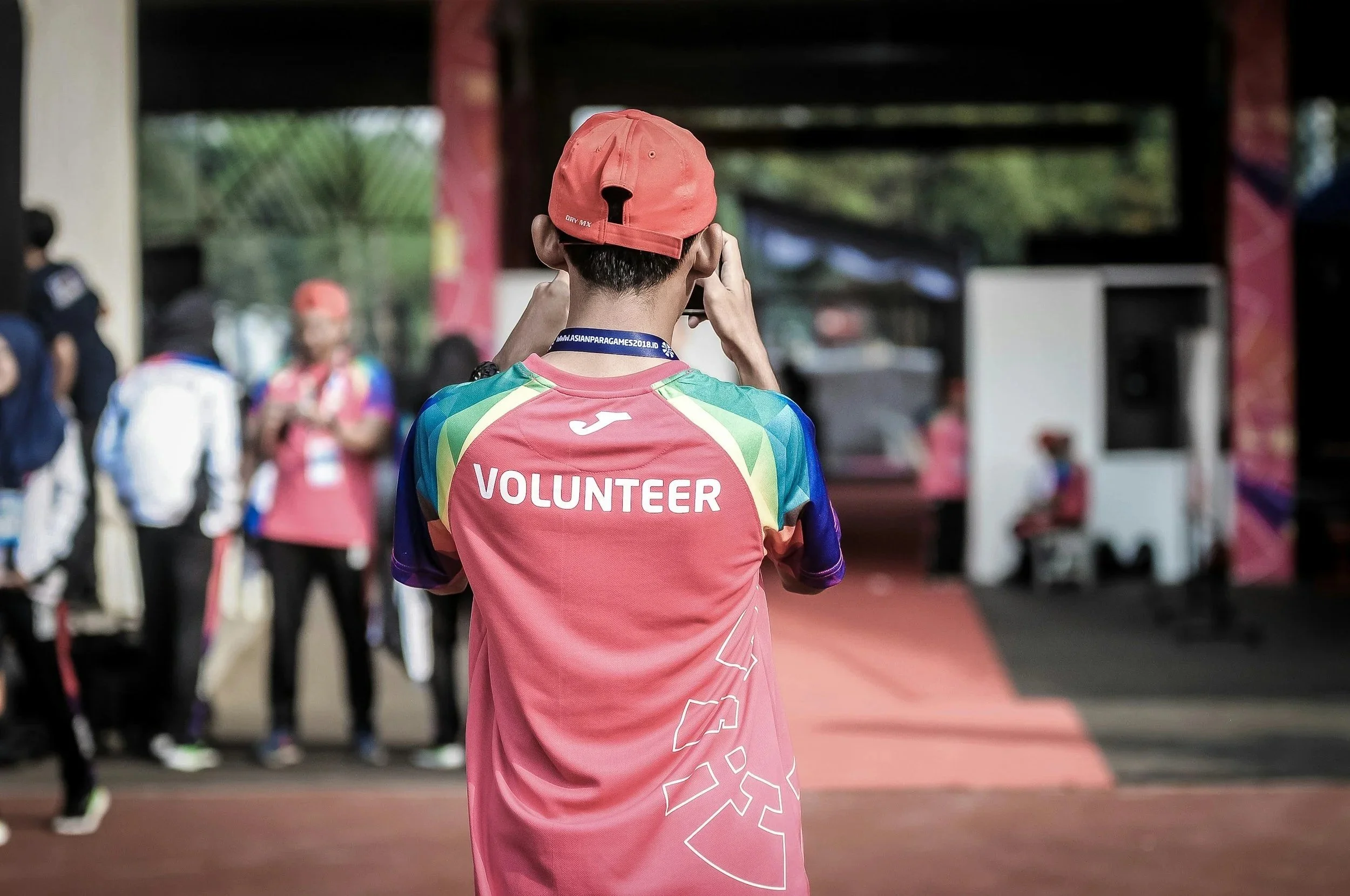
Volunteering is one of the most accessible ways to enter and try new environments. If you lack qualifications, experience or local networks, you can learn by participating, observing, and gradually taking on responsibility. If you have skills to offer, it’s a great way to get practical experience for theoretical knowledge, or in case of having experience abroad - volunteer organizations can give you a good proof of skills from the local market, which can be advantage in traditional recruitment.
In Finland, many festivals/events, organizations (usually marked with ry - rekisteröity yhdistys - registered organizationin Finland), initiatives as well as residential hubs (districts, towns, villages, communities, vacation home areas, etc.) rely on volunteers.
What makes volunteering particularly valuable is, that it enables you to stay active, and get connected with different communities, which often lead to further opportunities.
Where to find opportunities to volunteer?
Volunteering opportunities are often not centralized in one place, especially in smaller cities. Many roles are shared through networks, social media (for example: “come as a volunteer - tulee vapaaehtoiseksi”), local communities or directly by organizers. In many cases, the most effective approach is still the simplest: find something interesting and message the organizer directly.
You can keep an eye on what’s happening around by following on social media your city, local event organizers, student associations (if you’re a student), local volunteer organizations and organizational hubs (such as Yhteisökeskus), Facebook groups, etc. Good place to start is by finding local interest-based groups - whether something you like, or something you want to learn.
You can also volunteer to any events inside of Finland or abroad, where you typically pay for your travel and accommodation, but get access to the venues for free, oftentimes with some food and goodie bags included. There could be options for sharing accommodation with other volunteers, or that the organizer has made a deal with a local hotel, so that you get better pricing. Keep in mind, that larger events can be outside of the city limits, and during times of no public transport, so before you sign up to everything - check whether you can actually get there, or whether you need to arrange some sort of carpooling with another volunteer.
Part-time seasonal contract work opportunities
Short-term and part-time contract roles are one of the most effective ways to understand how working life functions in Finland, on a very flexible schedule. These roles provide a natural environment to practice the Finnish language in real situations, even at a basic level. This kind of exposure is difficult to replicate in a classroom and becomes a key part of long-term integration.
During summer, the most common opportunities are linked to tourism, events, and customer-facing services. This includes work in cafés, restaurants, hotels, amusement parks, retail, and various festivals and outdoor events. Coastal and tourist areas like Yyteri, for example, often have increased demand for temporary staff due to visitor volume. In addition to traditional service roles, summer also creates a large number of opportunities in logistics, warehouse work, cleaning services, and delivery. Many companies expand their workforce temporarily to handle increased demand, which makes these roles more accessible even without long-term commitments.
During winter, seasonal work shifts more toward indoor and operational roles. This can include retail during the holiday season, hospitality, storage and logistics, as well as substitute roles in public services and care sectors. Temporary operations scaling for Christmas food production also spikes during the winter months, which requires additional staff.
Across both seasons, there are also continuous opportunities in event-based work, which does not follow a strict seasonal pattern but increases around festivals, cultural events, and major local happenings. These roles are often flexible and short-term, making them accessible alongside studies or other commitments.
The key in finding a seasonal job is timing. Summer jobs get published already in January-February, and Winter jobs get published in August. Additional positions may be available later on, but it’s good to be active early.
Staying active is the hidden advantage
One of the most important, but often overlooked benefits of volunteering and seasonal work is continuity.
When you remain active, you maintain your skills, your routines, social communities around you and your sense of direction. You also remain visible to others, which increases the likelihood of being included in future opportunities.
Having long periods of inactivity make it harder to restart, and can affect negatively your mental and physical health. Re-entry becomes more difficult as key skills become forgotten, or language doesn’t get enough use. Choosing to stay engaged, even without a formal job, helps to creates and maintain momentum.